Storage tanks & vessels
FRP and dual-laminate tanks for corrosive and caustic chemicals, engineered to international standards and built to last 35+ years.
FRP storage tanks built for aggressive chemicals
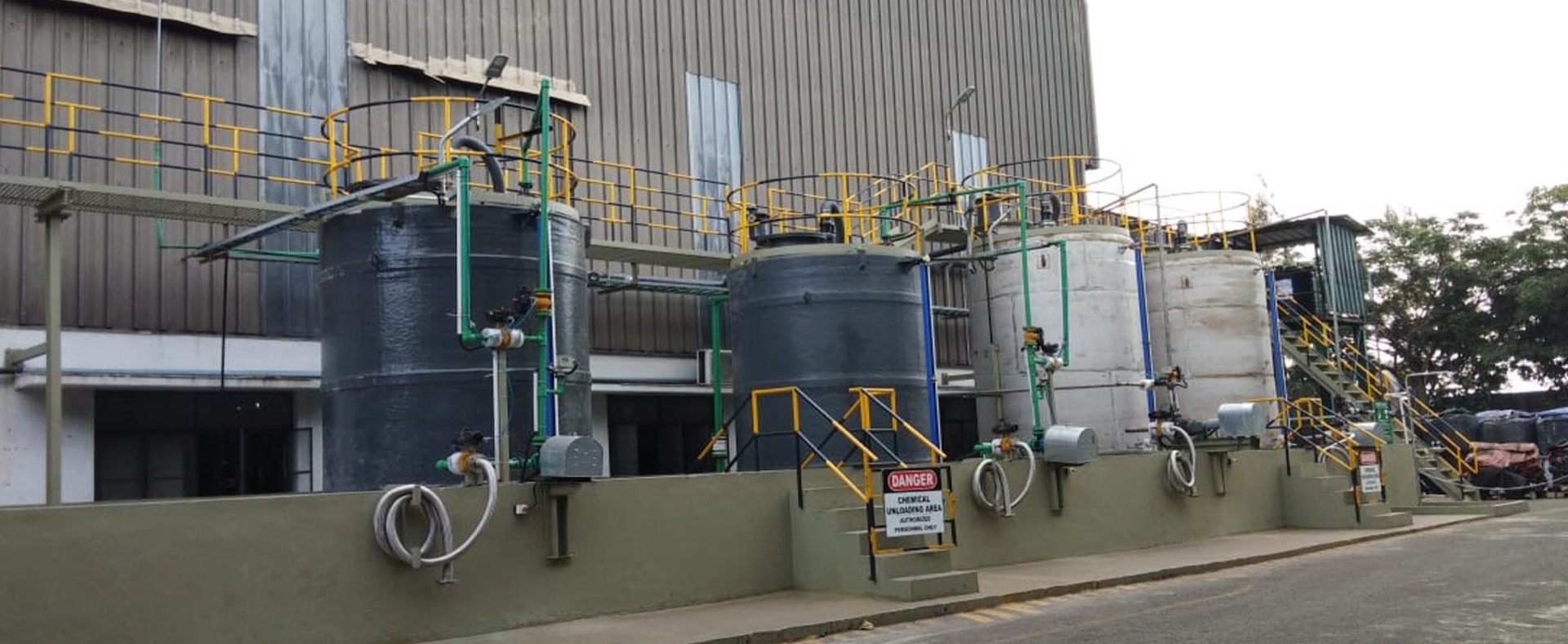
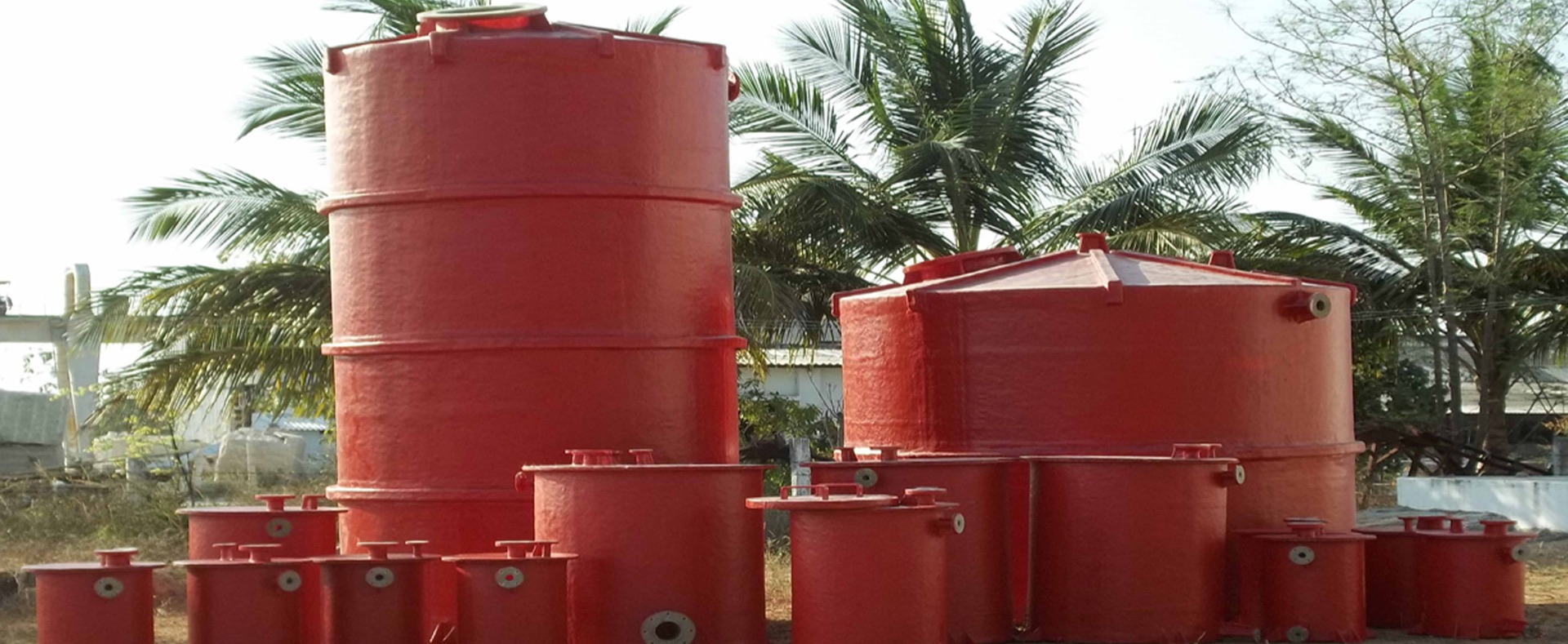
Laybond FRP tanks safely store bleach, sodium hydroxide, sulphuric acid, hydrochloric acid and many other corrosive and caustic chemicals across a wide range of industries.
Tanks are engineered to BS 4994-1987. Most are cylindrical, but rectangular and custom shapes are available.
- Capacity
- 1 – 300 m³
- Design code
- BS 4994 / ASTM D-3299
More than a tank
Custom fittings
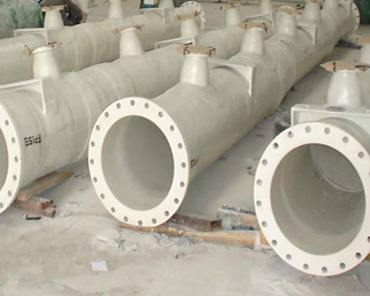
Flanged nozzles, threaded couplings, access & view ports, level gauges, internal baffles, agitator supports, ladders, platforms and handrails.
Lifting & handling
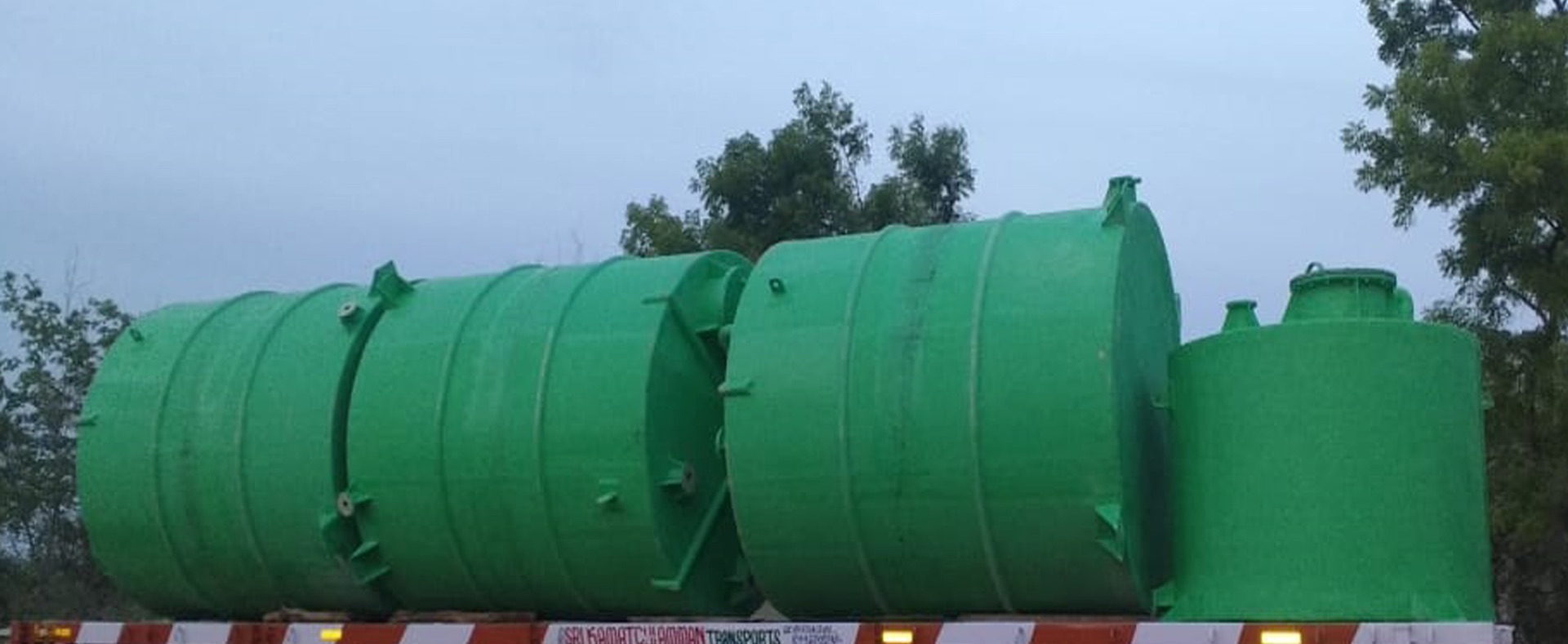
Lifting lugs and handling arrangements designed in, plus competitive shipping rates.
On-site service
Installation, commissioning, maintenance, repairs and modifications.
Emergency support
Rapid-response emergency service to keep your plant running.
Tank types
Choose the bottom and top configuration that suits your process, drainage and site constraints.
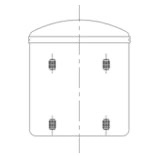
Our most common design, built to ASTM D-3299 or D-4097. Requires a flat, fully supporting foundation.
Top options
- Closed dome top: Our most requested top. ASME flanged-and-dished design with a standard top manhole and loose cover.
- Closed flat top: Fixed flat surface where headspace is limited, agitator rails are required, or a walking surface is needed.
- Open top, 90° flanged rim: For a flat cover, agitator rails or full access to the tank.
- Open top, Type II rim: The most economical option when no cover or rails are needed.
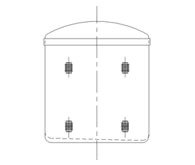
Available with internal or external slope. Internal slope uses a 1″ minor and bottom core with a standard pitch of ¼″ per foot. External slope requires a customer-supplied sloped pad.
Top options
- Closed dome top: Our most requested top. ASME flanged-and-dished design with a standard top manhole and loose cover.
- Closed flat top: Fixed flat surface where headspace is limited, agitator rails are required, or a walking surface is needed.
- Open top, 90° flanged rim: For a flat cover, agitator rails or full access to the tank.
- Open top, Type II rim: The most economical option when no cover or rails are needed.
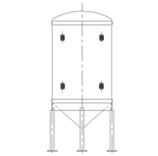
Provides complete drainage with a standard 90° apex angle. Supplied with a primed carbon-steel pipe leg stand, floor plates and 18″ clearance.
- Leg options: painted carbon steel, FRP, SS 304 or SS 316
- FRP skirt available
Top options
- Closed dome top: Our most requested top. ASME flanged-and-dished design with a standard top manhole and loose cover.
- Closed flat top: Fixed flat surface where headspace is limited, agitator rails are required, or a walking surface is needed.
- Open top, 90° flanged rim: For a flat cover, agitator rails or full access to the tank.
- Open top, Type II rim: The most economical option when no cover or rails are needed.
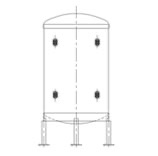
Near-complete drainage with ASME flanged-and-dished (torispherical) heads, chosen when head pressure is needed at the outlet. 18″ leg stand standard.
- Leg options: painted carbon steel, FRP, SS 304 or SS 316
Top options
- Closed dome top: Our most requested top. ASME flanged-and-dished design with a standard top manhole and loose cover.
- Closed flat top: Fixed flat surface where headspace is limited, agitator rails are required, or a walking surface is needed.
- Open top, 90° flanged rim: For a flat cover, agitator rails or full access to the tank.
- Open top, Type II rim: The most economical option when no cover or rails are needed.
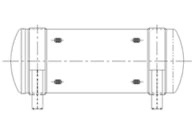
Ideal where floor space is available but headroom is limited. ASME flanged-and-dished ends, minimum two primed carbon-steel saddles with 12″ clearance.
- Saddle options: painted carbon steel, FRP, SS 304 or SS 316
Where our tanks work
- Acids
- Caustics
- Solvents
- Petroleum products
- Chemicals
- Water treatment plants
- Electroplating
- Brine solutions
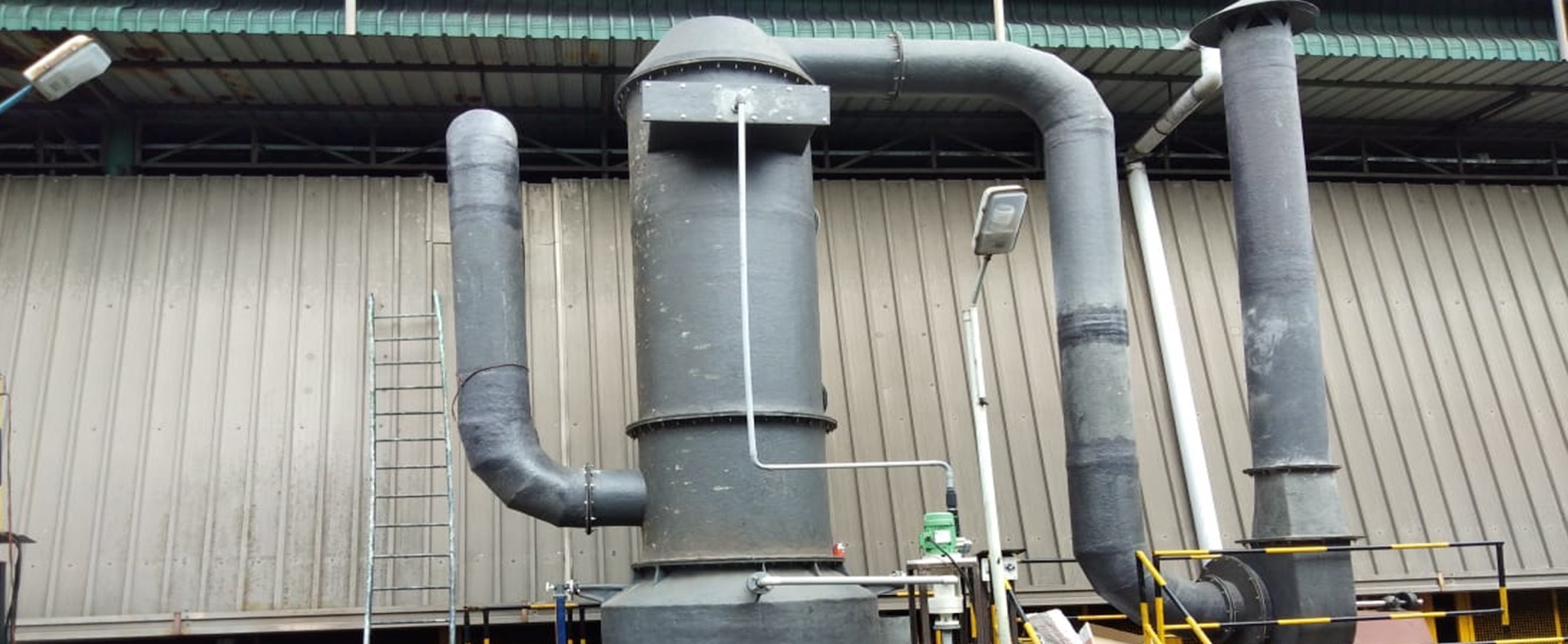
- Pollution control equipment
- Food processing
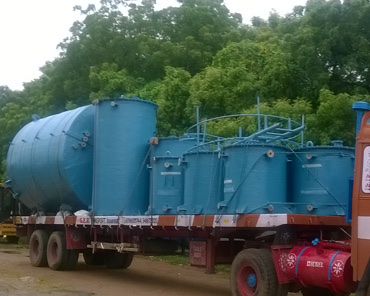
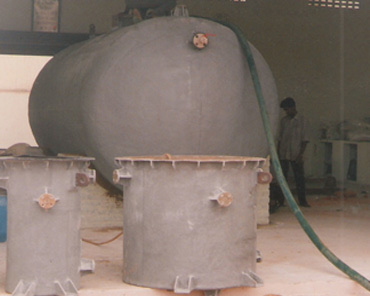
Resin systems & dual laminate
We build to customer specification using polyester, bisphenol and vinyl ester thermoset resins. Where FRP alone will not work, a dual-laminate construction usually will.
What is dual laminate?
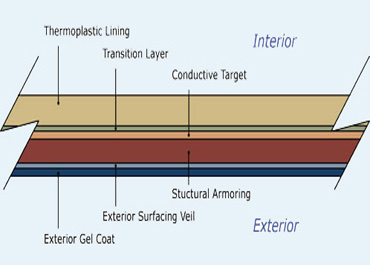
A hybrid construction: a strong fibreglass composite structure on the outside and a specialised thermoplastic liner on the inside. The liner is chosen to match the specific chemistry for maximum service life.
- Mechanical strength of an FRP composite exterior
- Corrosion-resistant thermoplastic interior for hazardous chemistry
- High-temperature and abrasion resistance
- Resists leaching agents and chemical attack
- Suitable for high-purity processes
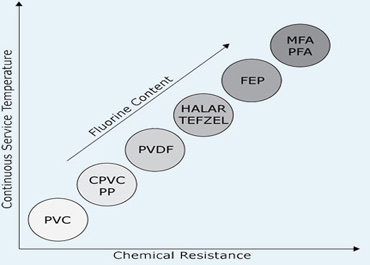
Liner options: PVC · CPVC · PP · HDPE and others, selected per chemical. See our thermoplastic corrosion chart.
Have a corrosion challenge?
Tell us the chemical, concentration, temperature and volume. Our engineers will recommend the right FRP or dual-laminate solution and send you a detailed quote.